
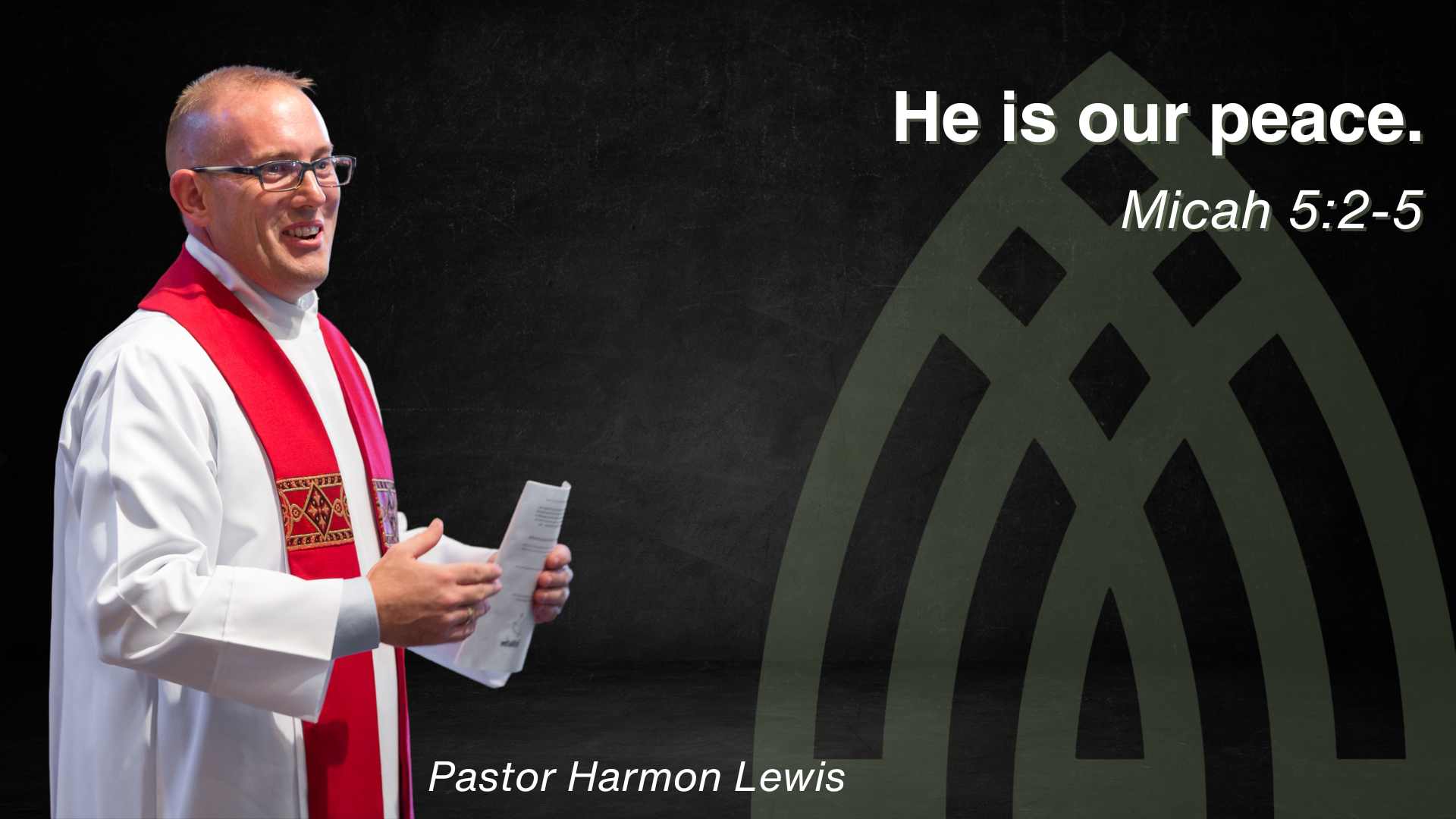
He is our peace. - Micah 5:2-5
100 years ago, the world was at war. The assassination of Archduke Ferdinand was the spark that ignited a powder keg of tensions that had been building in Europe. Major powers like Britain, France, and Germany were competing for colonies and resources in Africa and Asia. To ensure they were getting what they believed to be their fair share of the world, the nations of Europe entered an arms race. Military spending was drastically increased, and generals were given unprecedented powers to obtain and secure their share of the world. In 1914 it seemed as though the world was looking for a fight, and the assassination of Archduke Ferdinand gave them the excuse to do just that.
In the beginning patriotic pride and nationalist ambition swept across Europe. Young men on both sides were eager to enter the fight. However, as they experienced the brutality and horror of war the romanticism of battle quickly faded and the grim reality of the conflict set in. As artillery rounds rained down upon them, soldiers huddled in trenches that were often waist deep in water, they dare not lifts thier heads too high out of the mud for fear that a snipper would see them. Between the opposing trenches was a barren wasteland called “No Man’s Land”. This strip of muddy earth was full of the bodies of fallen soldiers from both sides.
On the first Christmas Eve of the war, soldier in Belgium and France huddled together in the frozen trenches in an attempt to stay warm. It was a cold and clear night, and for a time it was quiet. But then British soldiers heard a most unwarlike sound drifting across No Man’s Land. It was the sound of singing, and though the lyrics were sung in German the tune was easily recognizable to the English ear. “Stille Nacht, heilige Nacht, Alles schläft; einsam wacht.” Almost instinctively British voices joined in, “Round yon virgin mother and child. Holy infant, so tender and mild” “Schlaf in himmlischer Ruh!”, “Sleep in heavenly Peace.” Then the most remarkable thing happened. British soldiers peaked their heads out of the trenches and saw tinny Tannenbaums (or Christmas trees) appearing on the edge of the German trenches. British Rifleman C.H. Brazier wrote in his diary, “We saw a German come out and hold his hand up, behind him were two rolling a barrel of beer. They came halfway across and signed to us to come for it. Three of us went out, shook hands with them, wished them a merry Christmas, and rolled the barrel to our own trenches amid the cheers of both British and Germans!” In various places along the front, soldiers from both sides came out of their trenches exchanged Christmas greetings and gifts. There is even a report of an impromptu soccer match being played. German Lieutenant Johannes Niemann wrote in his diary, "We marked the goals with our caps. Teams were quickly established for a match on the frozen mud, and the Fritzes beat the Tommies 3–2."
In the midst of a war, which claimed on average 6,000 lives per day, there was, for a brief moment in time, peace on earth. But sadly, as is often the case when peace is brokered by men, conflict quickly resumed. When Command on both sides learned about the Christmas Truce of 1914, they were furious, fearing that it would destroy the “fighting spirit” of the troops. In the years that followed, artillery was often ordered to fire on Christmas to ensure the war effort would never again be interrupted by peace.
Christmas, more than any other time of year, is when we long for peace. Charles Dickens has convinced us that this is the time of year for us to set aside our grievances, focus on the betterment of our fellow man, and be of good cheer. Norman Rockwell would like us to believe that Christmas is properly celebrated when families gather in a home full of harmony and happiness. Perhaps not for the entire season, but on Christmas Eve most of us are able to participate in this fairytale long enough to pretend we are a peaceful people. But it doesn’t take long and it doesn’t take much for a spark to ignite the powder keg of sin inside us and before you know it hostilities resume. Even among allies like our friends and family, shots are fired. Words are spoken in haste and with hurtful intent. Egos are bruised, spirits are crushed, and feelings are upset. We might for a moment set aside our differences and pretend to be a peaceful people, but it doesn’t take long for us to return to our trenches and prove that we are a people completely incapable of keeping the peace.
Thankfully, the LORD God is much better at keeping the peace than are we. Through the prophet Micah, the LORD God promised, “2 But you, Bethlehem Ephrathah, though you are small among the clans of Judah, out of you will come for me one who will be ruler over Israel, whose origins are from of old, from ancient times.” Long ago; from “days of old” and “ancient times”, the LORD God had decided Bethlehem was to be the birthplace one who would be ruler over Israel or as the prophet Isaiah described Him the Prince of Peace. 2,000 years ago, the LORD God fulfilled that promise when the virgin Mary gave birth to the baby Jesus and what the prophets proclaimed the angels sang, “Glory to God in the highest, and on earth peace to men on whom his favor rests.”[1]. God sent His Son into a world that was full of people who were in conflict with their creator, in conflict with each other, in conflict within themselves… and God promised these people of conflict that “He [His Son] would be their peace”.
That God sent His Son to bring peace on earth sounds wonderful, but If human history has taught us anything it is that peace is at best a momentary cessation of hostility. Peace might be enjoyed for a moment but it cannot be kept, it cannot be sustained and maintained. We have tried! Throughout human history, we have negotiated for peace, we have made concession for peace, and we have enforced the peace. And for a brief moment in time, we might have a semblance of peace like the one the soldiers experienced during the Christmas Truce of 1914, but the peace never lasts. That war those soldiers fought in was called the War to End all Wars, but it wasn’t. In the century that followed hundreds of wars were fought and, in the century to come, I suspect hundreds more are yet to be fought.
Human history has taught us that peace is at best a momentary cessation of hostilities, but the peace that God’s Son offers is not dependent on the negotiations, concessions, or the might of man. The peace that God’s Son offers is dependent on Him and Him alone. Which is a good thing because God’s Son is the only one capable of keeping the peace. The prophet Micah tells us God’s Son “4 will stand and shepherd his flock in the strength of the LORD, in the majesty of the name of the LORD his God. And they will live securely, for then his greatness will reach to the ends of the earth.” God’s Son “stands” “in the strength” and “in the majesty of the name of the LORD”. Notice He doesn’t just stand before the strength and majesty of the LORD, He doesn’t just stand in front of the strength and majesty of the LORD, He doesn’t just stand with the strength and majesty of the LORD He stands IN IT. He stands IN IT because He IS IT. He is the strength and majesty of the LORD because He is the LORD. There is nothing that is stronger or more majestic than He, not on earth, not in the universe, not in the heavens. God’s Son is strength and majesty and as such He has the power to crush any empire, people, or power who dare disturb the peace. But thankfully for people of conflict, God’s Son did not come to crush, rather, He came to shepherd; to “shepherd His flock” so that “they will live securely”. Like a good shepherd, God’s Son came to provide and protect guide and direct His people from this place of conflict, through the valley of the shadow of death, and to the place of perfect peace.
God’s Son came to resolve the conflict between the created and our Creator. It was not a mere misunderstanding that caused creation to be in conflict with our creator. When Adam and Eve ate the forbidden fruit in the garden of Eden and corrupted creation with sin, it was a declaration of war against God. Ever since then the sons and daughters of Adam and Even for generations to come including this generation that has now come have been by nature hostile toward God. The prophet Isaiah described us well when he wrote, ‘Ruin and destruction marked our ways and the way of peace we did not know’[2]. By nature, we are entrenched in our sin and we are unwilling and incapable of rolling a peace offering across the No Man’s Land that separated us from our God. But Jesus was willing and able to offer a peace offering in our place. Jesus took our sin upon Himself and suffered the punishment of the cross so that we who were once at war with God and hostile toward God might be a people at peace with our God. God sent His Son Jesus so that we might be a people at peace with our God.
God’s Son came to foster peace among people in conflict with each other. We have learned to equate peace with separation and solitude. Even the closest of friends and the most beloved family member can get on our nerves. Which is why we say things like, “I just need some time to myself, time away from it all, a moment of solitude so that I can be at peace.” But the peace that Jesus brings is not separation and solitude. The peace that Jesus brings is reconciliation and relationship. Jesus did not come to separate us like squabbling siblings who need to be sent to their rooms so that the house might have a moment of peace. Jesus came to bring us together, to bring us close to Him and as a result bring us close to one another. Through His Word Jesus teaches us, trains us, equips us, and empowers us to take the words and actions of others in the kindest possible way rather than look for a reason to be offended, to turn the other check rather than escalate tension, to forgive and forget rather than fester and feud. God sent His Son Jesus so that we might be a people at peace with each other.
God’s Son came to offer peace to people in conflict with themselves. We can be at peace with our God and at peace with each other but if we are not at peace within ourselves, we cannot enjoy the peace that Jesus brings. Our consciences like to remind us of all the acts of aggression we have committed against God and our friends and family. Our conscience would have us believe that peace isn’t possible for peoiple like us. But in Jesus peace is not only possible it is promised. God is greater than your guilt. In Jesus, God has forgiven you. In Jesus, God has redeemed you. In Jesus, God has pardoned you. As far as God is concerned in Jesus, you are holy, you are righteous and you are innocent, as far as God is concerned, in Jesus, you are peaceful people. God sent His Son Jesus so that we might have peace within ourselves.
2,000 years ago, in the little town of Bethlehem God’s Son came to bring peace to a people in conflict. Unlike the temporary Christmas truce of 1914, this peace will last, it will endure, it will remain because this peace does not depend on the negotiations, concessions, or the might of men. This peace depends on Jesus. Tonight, we do not celebrate a cease fire, we do not celebrate a temporary truce. Tonight, we celebrate a lasting peace between the created and our Creator, peace with one another, and peace within ourselves. Tonight, we celebrate that God sent His Son Jesus to be our peace. Amen
[1] Luke 2:14
[2] Isaiah 59:7b-8